
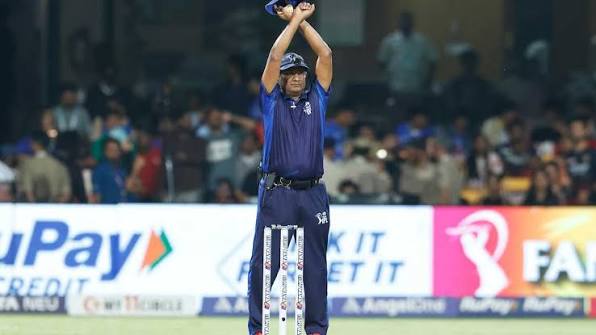
The Impact Player Rule in IPL has transformed team strategies since its introduction in 2023, allowing franchises to replace one player with a specialist batter or bowler during a match. This gives teams greater flexibility and more tactical options.
However, the rule has sparked controversy among cricket legends and players, including Rohit Sharma, Virat Kohli and Axar Patel, who believe it could reduce the importance of genuine all-rounders and disrupt the balance between bat and ball.
The debate intensified in 2026 when a majority of IPL captains reportedly opposed the rule. Discover how the Impact Player rule works, its key restrictions, famous IPL examples and why its future remains a hot topic in cricket.
What Is the Impact Player Rule in IPL?
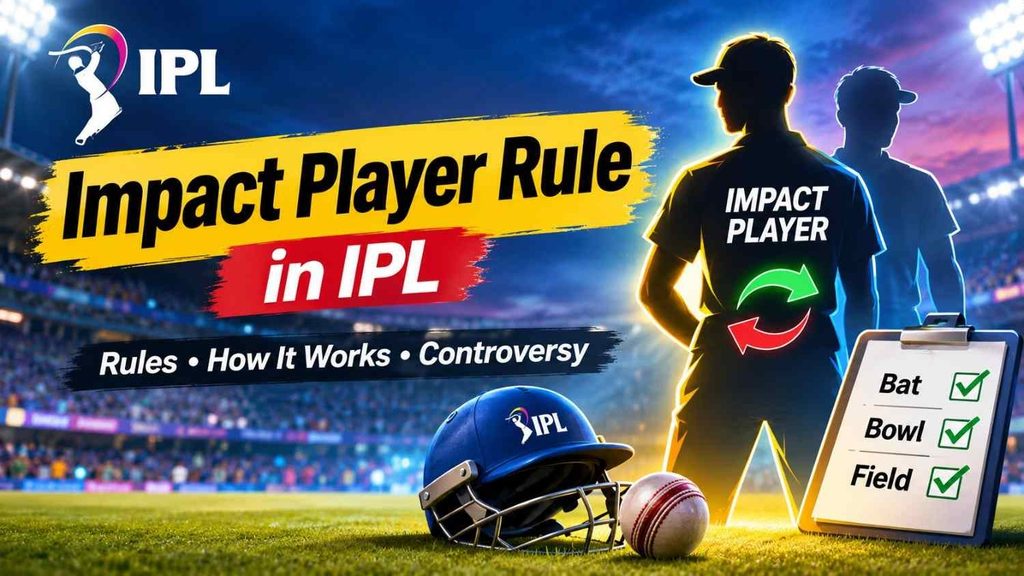
The Impact Player rule in IPL allows each team to introduce one substitute player during a match from a list of five nominated substitutes.
Unlike a traditional substitute fielder, an Impact Player can participate fully in the game. They can bat, bowl and field according to the normal playing conditions.
The Board of Control for Cricket in India (BCCI) first introduced the Impact Player concept in domestic cricket through the Syed Mushtaq Ali Trophy in 2022 before bringing it into the IPL in 2023.
Each team can effectively use 12 players during a match, although only 11 players can bat or field for a team at any one time.
Key details of the Impact Player rule:
- Introduced in domestic cricket through the Syed Mushtaq Ali Trophy in 2022.
- Introduced in the IPL in 2023.
- Each team can nominate five substitute options.
- Only one substitute can become the Impact Player.
- Using an Impact Player is optional.
- The Impact Player can bat and bowl.
- The replaced player cannot participate again in the match.
- Both teams can use one Impact Player each.
- Only 11 players can bat in an innings.
- The rule is scheduled to remain in place through the IPL 2027 season.
How Does the Impact Player Rule Work in IPL?
The rule gives teams the freedom to change their playing combination according to match conditions. However, captains must follow specific substitution procedures.
1. Team Selection Before the Toss
Each team submits its playing XI and five nominated substitute options as part of the team selection process.
The captain can choose one eligible substitute from the nominated list to become the Impact Player during the match.
2. When Can a Team Introduce an Impact Player?
A team can introduce its Impact Player at specific moments during a match.
The batting team can introduce an Impact Player:
- Before the start of its innings.
- After an over is completed.
- At the fall of a wicket.
- When a batter retires during an over, subject to the playing conditions.
The bowling team can introduce an Impact Player:
- Before the start of the opposition’s innings.
- After an over is completed.
- At the fall of a wicket.
However, if the bowling team introduces its Impact Player immediately after a wicket falls during an over, the incoming player cannot bowl the remaining deliveries of that over.
3. The Replaced Player Cannot Return
Once a player is replaced by an Impact Player, the original player cannot participate again in that match.
They cannot return to bat, bowl or field as a substitute fielder.
4. The Impact Player Can Bat and Bowl
An Impact Player receives the same playing rights as a regular member of the team, subject to normal restrictions.
For example, if a team introduces a specialist batter, that player can strengthen the batting order. If it introduces a specialist bowler before the bowling innings, that player can bowl up to four overs in an uninterrupted innings.
The incoming bowler’s four-over quota is independent of the number of overs previously bowled by the replaced player.
These provisions make the substitution a genuine tactical decision rather than a simple injury replacement.
Impact Player Rule in IPL: Important Rules and Restrictions
Although the rule provides flexibility, teams cannot make unlimited substitutions. Several restrictions determine who can enter the match and how they can participate.
| Rule | Explanation |
| Maximum Impact Players | One per team per match |
| Eligible substitutes | Five nominated options |
| Substitution | Optional |
| Overseas restriction | Maximum four overseas players on the field |
| Replaced player | Cannot return to participate |
| Batting rights | Can bat like a regular player |
| Bowling rights | Can bowl up to four overs in an uninterrupted innings |
| Captaincy | An Impact Player cannot act as captain under the BCCI’s Impact Player guidance |
| Batting limit | Maximum 11 players can bat for a team |
The captaincy restriction is separate from the general restriction on substitute fielders. Under the playing conditions, a substitute fielder cannot bowl or act as captain.
Can an Overseas Player Become an Impact Player?
Yes, but there is an important restriction.
A team cannot have more than four overseas players representing it on the field at any time.
If the starting XI already contains four overseas players, the Impact Player must be Indian.
However, if the starting XI contains fewer than four overseas players, an overseas player can enter as the Impact Player, provided the total does not exceed four.
For example:
- Starting XI with four overseas players: Only an Indian Impact Player can be introduced.
- Starting XI with three overseas players: An overseas Impact Player can be introduced.
- Starting XI with two overseas players: An overseas Impact Player can also be introduced, provided the total does not exceed four.
This restriction prevents teams from using the rule to exceed the overseas-player limit.
Can 12 Players Bat in an IPL Innings?
No. Even though a team can use an Impact Player, the playing conditions clearly state that only 11 players can bat in an innings.
The Impact Player rule does not give a team an additional twelfth batting opportunity.
For example, if a team replaces a batter who has already batted, it cannot use the incoming player to increase the total number of batters beyond 11.
A team can replace a player who has already batted or bowled, but the normal batting limit still applies.
What Happens in a Shortened IPL Match?
The Impact Player rule also has provisions for delayed and interrupted matches.
If a match is shortened, the permitted time for introducing an Impact Player can change according to the number of overs available.
The regulations also contain restrictions when a match is reduced to fewer than 10 overs per side. The eligibility to introduce an Impact Player depends on when the reduction occurs and whether a team has already used its substitution.
Teams must follow the applicable match-specific playing conditions rather than assuming that the normal introduction timings always apply.
How Do IPL Teams Use the Impact Player Rule?
The biggest advantage of the Impact Player rule is tactical flexibility. Teams can make decisions based on the match situation instead of relying entirely on their original playing XI.
Here are three common situations.
1. Bringing in an Extra Batter
Suppose a team is batting first and loses early wickets. The captain may introduce a specialist batter to strengthen the batting order.
This gives the team another batting option and allows its remaining batters to play more aggressively.
2. Adding a Specialist Bowler
Imagine a team scores 210 runs while batting first. When it begins bowling, the captain may replace a batter with a specialist bowler.
The extra bowling option can help control the opposition’s scoring rate and create more wicket-taking opportunities.
3. Adjusting to Pitch Conditions
Pitch conditions can change the team’s requirements.
For example, a slow pitch may encourage a captain to introduce another spinner. A surface offering pace and bounce may make an additional fast bowler more valuable.
The decision depends on the opposition, match situation and available substitutes.
Real IPL Examples: How the Rule Has Changed Team Strategy
Sunrisers Hyderabad and IPL 2024
Sunrisers Hyderabad demonstrated how an additional bowling option could complement an explosive batting performance against Royal Challengers Bengaluru on 15 April 2024.
SRH scored 287/3 in 20 overs, with Travis Head making 102 off just 41 balls. At the time, 287/3 was the highest total in IPL history.
RCB responded with 262/7, giving Hyderabad a 25-run victory.
For the second innings, SRH introduced Mayank Markande as its Impact Player, replacing Travis Head.
Markande subsequently took two wickets in four overs, helping SRH defend its enormous total.
This example shows how a team can replace an explosive batter with a specialist bowler after completing its batting innings.
Mumbai Indians and Rohit Sharma in IPL 2025
Mumbai Indians frequently used Rohit Sharma as an Impact Player during IPL 2025.
However, his role was not simply a tactical decision.
Head coach Mahela Jayawardene explained that Rohit had been managing a niggle following India’s Champions Trophy campaign. The franchise wanted to manage his workload without putting unnecessary pressure on him.
Jayawardene also explained that team composition and the need for faster boundary fielders influenced the decision.
Rohit’s batting contribution remained important to Mumbai Indians.
This example demonstrates how the Impact Player rule can also help franchises manage player workloads and adjust their fielding combinations.
Why Is the Impact Player Rule Controversial?
Image Source: Olympics
The Impact Player rule has divided opinions among players, coaches and cricket experts. While some believe it makes IPL matches more exciting, others argue that it changes the traditional balance between bat and ball.
The criticism is not limited to one or two players. Several prominent Indian and overseas cricketers have questioned the rule.
1. The BCCI Removed It from the Syed Mushtaq Ali Trophy
One of the strongest arguments against the Impact Player rule comes from the BCCI’s own domestic cricket decisions.
The concept was first tried in the Syed Mushtaq Ali Trophy in 2022 before being introduced into the IPL in 2023.
However, after criticism from players and fans, the BCCI decided to remove the Impact Player provision from the Syed Mushtaq Ali Trophy in 2024.
This created an interesting situation: the same board that introduced the rule in domestic cricket and subsequently brought it into the IPL decided to discontinue it in India’s domestic T20 competition while retaining it in the IPL.
The difference between the two decisions has become an important part of the debate about the rule’s future.
2. It Reduces the Importance of All-Rounders
This is one of the biggest criticisms.
Traditionally, teams selected all-rounders because they could contribute with both bat and ball. However, the Impact Player rule allows franchises to select specialist batters and bowlers separately.
For example, a team can start with an additional batter and later introduce a specialist bowler.
Several prominent cricketers have criticised this change:
- Rohit Sharma: Raised concerns in April 2024 about the rule affecting the development of all-rounders in Indian cricket, specifically mentioning Washington Sundar and Shivam Dube.
- Axar Patel: Expressed his dislike of the rule ahead of IPL 2026, explaining that teams increasingly prefer specialist batters or bowlers instead of genuine all-rounders.
- Hardik Pandya: Has also questioned the impact of the rule on the selection and development of all-rounders.
Axar Patel explained his position clearly:
“I don’t like this rule, honestly, because I am an all-rounder. Earlier, you would pick an all-rounder for both batting and bowling. Because of this rule, teams now prefer specialists.”
His criticism highlights the concern that players who contribute in two disciplines may lose opportunities when franchises can introduce specialist replacements.
3. Most IPL Captains Objected to the Rule in 2026
The debate became bigger during the IPL Captains’ Meeting in Mumbai on 25 March 2026.
A majority of the ten franchise leaders reportedly raised strong objections to the Impact Player rule and expressed reservations about its long-term effect on cricket.
According to an IPL source, the captains were told that the regulation could only be reviewed after the 2027 edition, not before.
This was significant because the criticism was not limited to one franchise or one captain. Most of the league’s leadership group reportedly shared concerns about the regulation.
The meeting demonstrated that the debate had become a wider issue involving team strategy, player development and the future balance of IPL cricket.
4. Several Other International Cricketers Have Criticised the Rule
The criticism has come from several prominent players with different concerns.
| Player | Main Concern |
| Rohit Sharma | Development of genuine all-rounders |
| Axar Patel | Specialist selections reducing all-rounder opportunities |
| Virat Kohli | Impact on the traditional balance of T20 cricket |
| Hardik Pandya | Reduced importance of all-rounders |
| Shubman Gill | Changes the traditional 11-vs-11 format |
| Mohammed Siraj | Contributes to increasingly high-scoring matches |
| Mukesh Kumar | Concerns about the effect on bowling and player roles |
| Glenn Phillips | Concerns about the impact on all-round cricket |
| Suresh Raina | Fit players batting and then sitting out |
Shubman Gill offered a particularly sharp description of the change, saying that the rule turns the IPL into a “12-vs-12 rather than a classic 11-vs-11 game of cricket.”
Mohammed Siraj has also linked the regulation to the increasing dominance of batters and the pressure placed on bowlers.
Former India batter Suresh Raina raised another concern, arguing that fit players can bat and then sit out after being replaced. He believes this reduces the need for players to contribute in multiple areas and makes life more difficult for bowlers.
These different criticisms show that the debate is about more than all-rounder selection. It also concerns the traditional structure of cricket and the balance between batting and bowling.
5. It Makes Life Difficult for Bowlers
An additional batting option can make the opposition’s bowling attack work harder.
Even after taking early wickets, bowlers may face another specialist batter entering the game. This can make defending totals more challenging.
The rule also encourages teams to select deeper batting line-ups, which can put additional pressure on bowling attacks.
Mohammed Siraj and Suresh Raina have both raised concerns about the increasing dominance of batting in the IPL.
However, bowlers have also discussed the need to adapt their strategies to modern T20 cricket rather than relying on traditional approaches.
6. It Can Increase Batting Dominance
The rule gives teams more batting depth and encourages aggressive cricket.
A comparison between IPL 2022, the last season before the Impact Player rule was introduced, and IPL 2025 shows the change in the number of sixes.
| Season | Impact Player Rule | Total Sixes |
| IPL 2022 | No | 1,062 |
| IPL 2023 | Yes | 1,124 |
| IPL 2025 | Yes | 1,294 |
IPL 2025 recorded 232 more sixes than IPL 2022, representing an increase of approximately 21.85%.
The comparison provides a useful before-and-after picture because IPL 2022 was the final season without the Impact Player rule.
However, these figures do not prove that the rule alone caused the increase. Pitch conditions, batting approaches, ground dimensions, player quality and other factors also influence scoring rates.
The collective batting strike rate also crossed 150 in IPL 2024, reaching approximately 150.58.
These statistics demonstrate the growing dominance of aggressive batting in modern IPL cricket.
7. It Changes Team Selection
Franchises can select players for specific situations rather than expecting every member of the starting XI to contribute in multiple disciplines.
This can create opportunities for specialist players but may reduce the opportunities available to developing all-rounders.
As a result, team selection has become more dependent on match situations and substitution strategies.
Is the Impact Player Rule Removed from IPL 2026?
No. The Impact Player rule was not removed from IPL 2026.
The regulation remained in use throughout the 2026 tournament despite criticism from several prominent cricketers and discussions about its long-term impact.
On 23 March 2026, Delhi Capitals captain Axar Patel publicly criticised the rule, explaining that it could reduce the importance of all-rounders.
Two days later, on 25 March, the IPL Captains’ Meeting took place in Mumbai. A majority of the franchise captains reportedly expressed reservations about the regulation.
At that meeting, captains were informed that the rule could only be reviewed after the 2027 edition.
However, the BCCI’s subsequent feedback process is also important.
In August 2026, the BCCI sought detailed feedback from all ten IPL franchises on the Impact Player rule and other cricket operations matters. The franchises were asked to submit their consolidated feedback by 31 August 2026.
This feedback request indicates that the BCCI is continuing to assess the regulation. However, no final decision to change or remove the rule has been announced.
The rule remains part of the IPL framework through the 2027 season. Its future beyond that period will depend on the board’s review and subsequent decisions.
Impact Player Rule in IPL: Advantages and Disadvantages
The rule has brought both benefits and challenges to the tournament.
| Advantages | Disadvantages |
| Provides tactical flexibility | Reduces the role of all-rounders |
| Gives specialist players opportunities | Creates additional pressure on bowlers |
| Allows teams to adjust combinations | Can increase batting dominance |
| Adds another strategic dimension | Makes traditional team selection less important |
| Helps teams respond to match conditions | Can affect the balance between bat and ball |
| Offers workload-management options | May reduce opportunities for developing all-rounders |
Whether the benefits outweigh the disadvantages remains a matter of debate.
Its long-term effect on Indian cricket will be an important consideration when the BCCI reviews the rule’s future.
Conclusion
The Impact Player rule in IPL has introduced a new dimension to T20 cricket. Introduced in domestic cricket in 2022 and brought into the IPL in 2023, it gives franchises greater tactical flexibility, allows specialist players to contribute and creates more options during matches.
However, concerns about the development of all-rounders, additional pressure on bowlers and the balance between bat and ball remain important.
The debate became more significant after the BCCI removed the rule from the Syed Mushtaq Ali Trophy in 2024 while retaining it in the IPL.
The objections raised by a majority of IPL captains in March 2026 and the subsequent feedback request to all ten franchises demonstrate that the regulation remains a major issue in Indian cricket.
The BCCI has retained the regulation through IPL 2027, but its future beyond that season remains open to review.
Ultimately, the question is not just whether the Impact Player rule makes IPL more entertaining, but whether it helps maintain the competitive balance that makes cricket exciting.
Frequently Asked Questions About the Impact Player Rule in IPL
The Impact Player rule allows each IPL team to substitute one player from its five nominated substitutes during a match. The replacement can bat, bowl and field like a regular player, subject to the playing conditions.
Each team can use only one Impact Player per match. Both teams can use one each, meaning a match can have two Impact Player substitutions.
Yes. An Impact Player introduced as a bowler can bowl up to four overs in an uninterrupted innings, even if the replaced player has already bowled. However, a bowler introduced after a wicket falls during an over cannot bowl the remaining deliveries of that over.
Yes. An overseas player can become an Impact Player if the team started with fewer than four overseas players. The total number of overseas players representing the team on the field cannot exceed four.
No. A team can use an Impact Player, but only 11 players are permitted to bat in an innings. The rule does not provide an additional twelfth batting opportunity.