
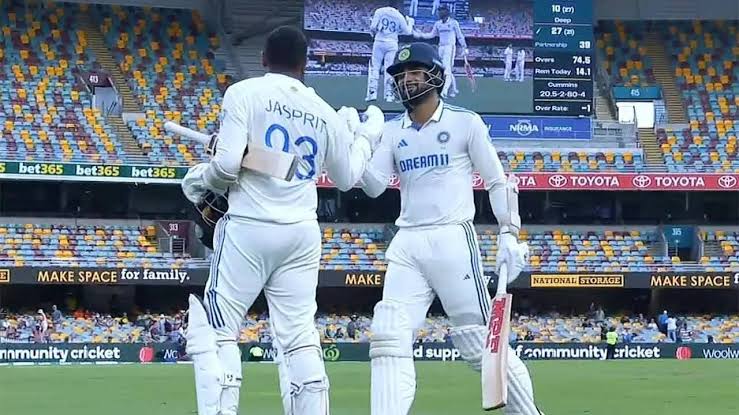
The follow-on is one of the most important tactical decisions in Test cricket. It allows the team batting first to ask the opposition to bat again immediately if it has built a sufficiently large first-innings lead.
However, enforcing the follow-on is not compulsory today. Captains can choose whether to put the opposition straight back in or give their own bowlers time to rest while extending their lead. This was not always the case: when the follow-on rule was introduced in 1835, it was compulsory if a team trailed by 100 runs or more.
The follow-on rule is mainly used in Test cricket and other multi-day matches played over two innings per team. Understanding its history, required lead, calculation and tactical considerations helps explain why some captains enforce it while others decline.
What Is Follow On in Cricket?
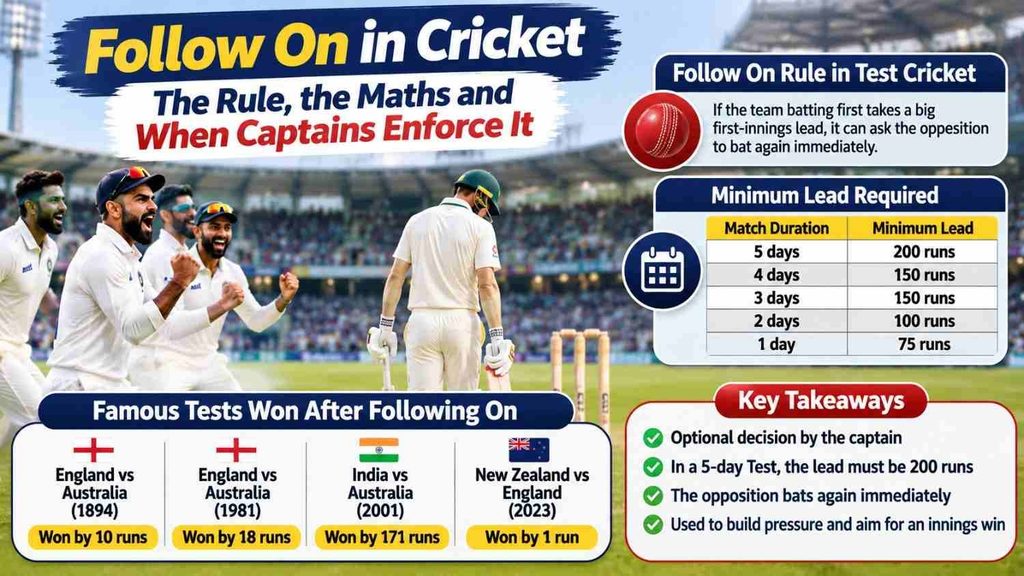
A follow-on in cricket is a rule that allows the team batting first to make the opposition bat again immediately after its first innings if the required run lead has been achieved.
In a standard five-day Test match, the team batting first must lead by at least 200 runs after both teams have completed their first innings to have the option of enforcing the follow-on.
For example:
- Team A scores 500 runs in its first innings.
- Team B scores 250 runs in its first innings.
- Team A leads by 250 runs.
- Team A can ask Team B to bat again immediately.
If Team A enforces the follow-on, Team B starts its second innings without Team A batting again.
The decision belongs to the captain of the team batting first. The captain can enforce the follow-on or choose to bat again and increase the lead.
History of the Follow-On Rule in Cricket
The follow-on was not always an optional decision. When the rule was introduced into the Laws of Cricket in 1835, it was compulsory if the team batting second fell at least 100 runs behind after the first innings.
The rule was revised over the following decades. In 1854, the compulsory deficit was reduced to 80 runs, and in 1894 it was increased to 120 runs. In 1900, the compulsory requirement was removed and the follow-on became an option under specified run thresholds.
Today, the captain of the team batting first decides whether to enforce it, provided the required lead has been achieved.
This historical change is important because it explains why the follow-on is now a tactical choice rather than an automatic requirement.
Follow On Rule in Cricket: How Many Runs Are Required?
The required follow-on lead depends on the scheduled duration of the match.
Under Law 14.1 of the MCC Laws of Cricket, 2017 Code, Fourth Edition (2026), the minimum first-innings lead is:
| Scheduled match duration | Minimum lead required |
| Five days or more | 200 runs |
| Four days | 150 runs |
| Three days | 150 runs |
| Two days | 100 runs |
| One day | 75 runs |
These thresholds remain unchanged in the 2026 edition of the Laws of Cricket, which came into effect on 1 October 2026. Three-day and four-day matches share the same 150-run threshold.
The 2026 text also makes the first-day provision clearer under Law 14.3. It specifies that play is considered to have taken place once, after the call of Play, the first over has started. This matters when deciding whether the first scheduled day was completely lost.
Important: These thresholds apply to matches in which each team has two innings. The one-day threshold of 75 runs does not mean that the follow-on applies to ordinary One Day Internationals.
The team must lead by the required number of runs or more. A lead of exactly 200 runs is enough in a standard five-day Test. A lead of 199 runs is not.
How to Calculate Follow On in Cricket: The Maths Explained
Calculating the follow-on lead is straightforward. Subtract the first-innings score of the team batting second from the first-innings score of the team batting first.
Formula:
Follow-on lead = First-innings score of Team A − First-innings score of Team B
For a standard five-day Test, the result must be at least 200 runs.
Example 1: Follow-On Can Be Enforced
| Team | First-innings score |
| Team A | 500 |
| Team B | 280 |
| Lead | 220 runs |
Team A leads by 220 runs, which is more than the required 200-run threshold. Therefore, Team A can enforce the follow-on.
Example 2: Follow-On Cannot Be Enforced
| Team | First-innings score |
| Team A | 450 |
| Team B | 270 |
| Lead | 180 runs |
Team A leads by only 180 runs. Since the required lead in a standard five-day Test is 200 runs, the captain cannot enforce the follow-on.
Example 3: Exactly 200 Runs
| Team | First-innings score |
| Team A | 500 |
| Team B | 300 |
| Lead | 200 runs |
Team A has achieved exactly the required lead. It can enforce the follow-on if the captain chooses to do so.
When Can a Captain Enforce the Follow On?
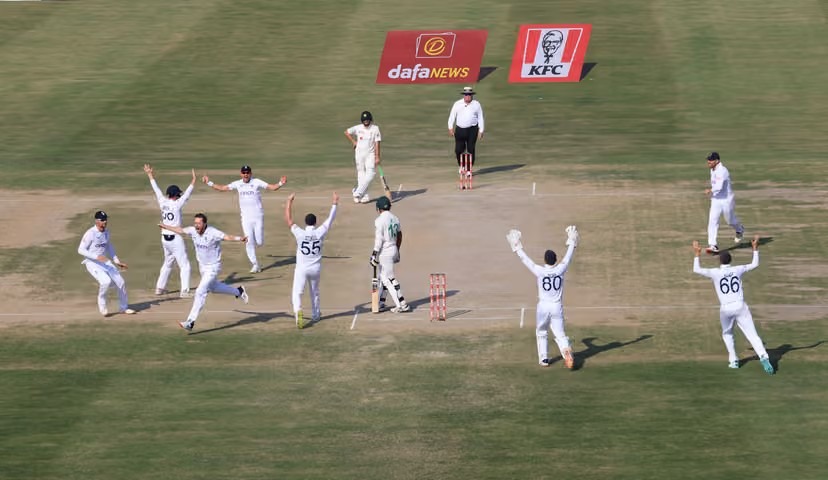
Source Image: sportsboom
A captain can enforce the follow-on after both teams have completed their first innings and the team batting first has achieved the required lead.
The decision must be communicated to the opposing captain and the umpires. Under Law 14.2, once the decision has been notified, it cannot be changed.
The follow-on is an option, not an automatic rule. Even when the team batting first has a lead of more than 200 runs in a five-day Test, its captain can decide to bat again instead.
The rule applies to matches played over two innings per team, such as Test cricket and certain multi-day matches. It does not apply to standard One Day Internationals or T20 matches because each team has only one innings.
Why Do Captains Enforce the Follow On?
Enforcing the follow-on can give the team batting first a strong tactical advantage. Captains generally consider it when they believe their bowlers can dismiss the opposition again quickly.
Here are the main reasons.
1. To Put Immediate Pressure on the Opposition
A team that has already been dismissed for a low score may find it difficult to recover when asked to bat again immediately.
The follow-on gives the bowling team another opportunity to take wickets while the opposition is under pressure.
2. To Aim for an Innings Victory
If the opposition falls behind by a large margin and is dismissed again for a score lower than the first-innings deficit, the team batting first can win by an innings.
For example:
- Team A scores 500.
- Team B scores 180.
- Team A enforces the follow-on.
- Team B scores 250 in its second innings.
Team B’s total across both innings is 430. Team A wins by an innings and 70 runs.
3. To Save Time in the Match
Enforcing the follow-on avoids spending additional time batting when the team already has a substantial lead.
This can be useful when rain or interruptions have reduced the available playing time. The captain may want to create enough time to dismiss the opposition and secure a result.
4. To Maintain Bowling Pressure
If the bowling attack is performing well and the pitch is helping the bowlers, the captain may prefer to continue attacking rather than allowing the opposition to recover.
Why Do Captains Sometimes Refuse to Enforce the Follow On?
A large first-innings lead does not automatically mean that enforcing the follow-on is the best decision. There are several reasons why a captain may choose to bat again.
1. To Give Bowlers More Rest
Fast bowlers can become tired after long spells in the field. Asking them to bowl another innings immediately may increase their workload and reduce their effectiveness.
Batting again gives the bowling attack additional time to recover.
2. To Build a Bigger Lead
A captain may want to extend the advantage before declaring the innings closed.
A larger target can make it more difficult for the opposition to save the match or chase a result. Under the 2026 MCC Law 15, however, a captain cannot declare or forfeit the final innings of the match.
3. To Take Advantage of a Changing Pitch
Some pitches become more difficult for batting as a Test match progresses. A captain may prefer to bat again while conditions remain manageable and make the opposition bat last on a deteriorating surface.
4. To Reduce the Risk of an Opposition Comeback
A follow-on gives the opposition another opportunity to bat while the leading team’s bowlers may be tired.
The famous 2001 Kolkata Test between India and Australia demonstrates this risk. Steve Waugh enforced the follow-on after Australia secured a 274-run first-innings lead. India recovered through VVS Laxman and Rahul Dravid, eventually winning by 171 runs.
The result became a major example of why a large lead does not guarantee victory. However, it is important not to assume that the match made all later captains reluctant to enforce the follow-on. Statistical analysis by cricket.com.au found that the overall rate of follow-on enforcement did not decline in the two decades after Kolkata.
2026 MCC Law Changes: Follow-On and Declaration Rules
The MCC introduced the fourth edition of the 2017 Code of Laws on 1 October 2026.
The four follow-on thresholds under Law 14.1 remain unchanged:
- 200 runs in a match of five days or more.
- 150 runs in a three-day or four-day match.
- 100 runs in a two-day match.
- 75 runs in a one-day, two-innings match.
The 2026 text of Law 14.3 also explicitly states when play is considered to have taken place for the first-day calculation. Once Play has been called and the first over has started, play is considered to have taken place. The first day on which play begins still counts as a complete day, regardless of the time at which play starts.
The important related change is under Law 15.1 and Law 15.2.
Under the 2026 edition:
- A captain may declare an innings closed when the ball is dead, except in the final innings of the match.
- A captain may forfeit an innings before it begins, except in the final innings of the match.
- A declaration or forfeiture, once notified, cannot be changed.
This means a team can still declare an earlier innings to manage the match, but it cannot declare or forfeit the final innings to manufacture a particular result.
The change does not remove the captain’s option to enforce the follow-on under Law 14. The follow-on thresholds and the notification requirement remain in place.
Famous Test Matches Won After Following On
Winning a Test match after being forced to follow on is one of the rarest achievements in cricket.
As of November 2026, only four men’s Test matches have been won by a team after it was asked to follow on. Three different teams have achieved this: England, India and New Zealand. England accounts for two of the four victories.
| Year | Match | Venue | Result |
| 1894 | England vs Australia | Sydney | England won by 10 runs |
| 1981 | England vs Australia | Headingley | England won by 18 runs |
| 2001 | India vs Australia | Eden Gardens, Kolkata | India won by 171 runs |
| 2023 | New Zealand vs England | Wellington | New Zealand won by 1 run |
England vs Australia, Sydney, 1894
England produced an extraordinary comeback against Australia in Sydney in 1894.
- Australia scored 586 in its first innings.
- England scored 325 in its first innings.
- Australia enforced the follow-on.
- England scored 437 in its second innings.
- Australia was dismissed for 166 in its second innings.
- England won the match by 10 runs.
This match was one of the earliest famous examples of a team winning after being forced to follow on.
England vs Australia, Headingley, 1981
The 1981 Headingley Test is remembered as one of the greatest comebacks in cricket history and is famously known as Botham’s Ashes.
- Australia scored 401/9 declared in its first innings.
- England was dismissed for 174.
- Australia enforced the follow-on.
- Ian Botham scored an outstanding 149 not out in England’s second innings.
- England scored 356 in its second innings.
- Bob Willis then took 8 wickets for 43 runs as Australia was dismissed for 111.
- England won by 18 runs in a remarkable turnaround.
Botham’s batting and Willis’s outstanding bowling made this one of the most memorable victories in Test cricket.
India vs Australia, Kolkata, 2001
India’s victory against Australia at Eden Gardens in March 2001 is one of the most famous follow-on comebacks in Test cricket.
Australia scored 445 runs in its first innings. India was dismissed for 171, giving Australia a first-innings lead of 274 runs.
Australia, under captain Steve Waugh, enforced the follow-on. However, India responded with a remarkable batting performance.
VVS Laxman scored 281 runs, while Rahul Dravid contributed 180. Their 376-run fifth-wicket partnership helped India reach 657 for 7 declared.
Harbhajan Singh also made history during the match by taking India’s first-ever Test hat-trick. He dismissed Ricky Ponting, Adam Gilchrist and Shane Warne in consecutive deliveries during Australia’s first innings.
Australia then had to chase a target of 384 runs. India dismissed the visitors for 212 and won the match by 171 runs, ending Australia’s record 16-match winning streak.
The match remains a classic example of why enforcing the follow-on can carry risks, even when a team has a substantial lead.
New Zealand vs England, Wellington, 2023
New Zealand produced another historic follow-on victory against England in February 2023.
England scored 435 for 8 declared in its first innings, while New Zealand managed only 209 runs. New Zealand was asked to follow on.
The hosts fought back with 483 runs in their second innings, setting England a target of 258 runs.
England was dismissed for 256, giving New Zealand a dramatic one-run victory.
This was only the second Test match in cricket history to be won by one run. The first was West Indies’ victory over Australia in Adelaide in 1993.
New Zealand also became the first Test team since India in 2001 to win after being forced to follow on.
Does Rain Affect the Follow On Rule?
Rain does not automatically change the standard follow-on run thresholds in Test cricket.
The required lead is normally determined by the scheduled duration of the match. For example, a standard five-day Test requires a first-innings lead of at least 200 runs.
However, MCC Law 14.3 provides a special exception if no play takes place on the first scheduled day of a match lasting more than one day.
In that situation, the follow-on threshold is calculated according to the number of days remaining when play begins. The day on which play first starts counts as a complete day, regardless of the time at which play begins.
The 2026 wording also makes clear that play is considered to have taken place once the first over has started after the call of Play.
For example:
- A five-day match loses its entire first day.
- Play begins on the second scheduled day.
- Four days remain for the follow-on calculation.
- The applicable follow-on threshold becomes 150 runs rather than 200.
This special provision does not apply to every rain interruption. It concerns a first day on which no play takes place.
Competition-specific playing conditions may also contain additional provisions, so teams must follow the regulations applicable to the particular match.
Conclusion
The follow-on rule in cricket gives the team batting first an important tactical option when it builds a substantial first-innings lead. In a standard five-day Test, that lead must be at least 200 runs.
The rule has changed significantly since its introduction in 1835, when enforcing the follow-on was compulsory after a 100-run deficit. Today, captains can choose whether to enforce it, depending on the pitch, bowling workload, time remaining and match situation.
The dramatic victories by England, India and New Zealand show why the follow-on remains one of the most fascinating tactical decisions in Test cricket.
Frequently Asked Questions About Follow On in Cricket
The follow-on rule allows the team batting first to ask the opposition to bat again immediately if it achieves the required first-innings lead. In a standard five-day Test, the minimum lead is 200 runs.
A team must have a first-innings lead of at least 200 runs to enforce the follow-on in a standard five-day Test match.
No. Enforcing the follow-on is optional under the current Laws of Cricket. The captain of the team batting first can decide whether to make the opposition bat again or continue batting.
Yes. When the follow-on rule was introduced in 1835, it was compulsory if the team batting second was at least 100 runs behind after the first innings. It became optional in 1900.
Yes. It is extremely rare, but four men’s Test matches have been won by a team after following on. England achieved this twice, in 1894 and 1981, while India did it in 2001 and New Zealand in 2023.